
By Molly Carbajal
Recently, many of us have heard officials warn that this year will bring an El Niño winter. But what exactly does this mean? Warmer ocean waters are causing high winds to push storms towards California. The storms are expected to be stronger than usual, and may result in flooding, power outages, and may cause major disruption in our daily lives. On November 18, we experienced the first of the heavy storms which caused record rainfall in San Francisco causing flooding in many neighborhoods turning streets into rivers. The storm also caused major flooding throughout the state, including the South Bay where cars were seen trapped under overpasses and intersections. Waymo self-driving cars were also stuck on the road, prompting the company to suspend service in the Bay Area during the storm.
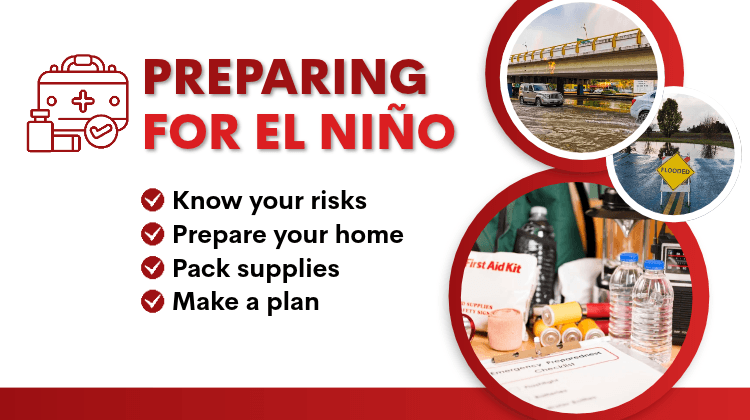
You may be feeling anxious and overwhelmed with the El Niño forecast and what we’ve experienced already. The best we can do for ourselves, and our families, is to be prepared. Using information provided by the California Office of Emergency Services (Cal OES), and Ready California, I’ve summarized some of the key steps you can take to protect your family now.
1. Knowing your risks
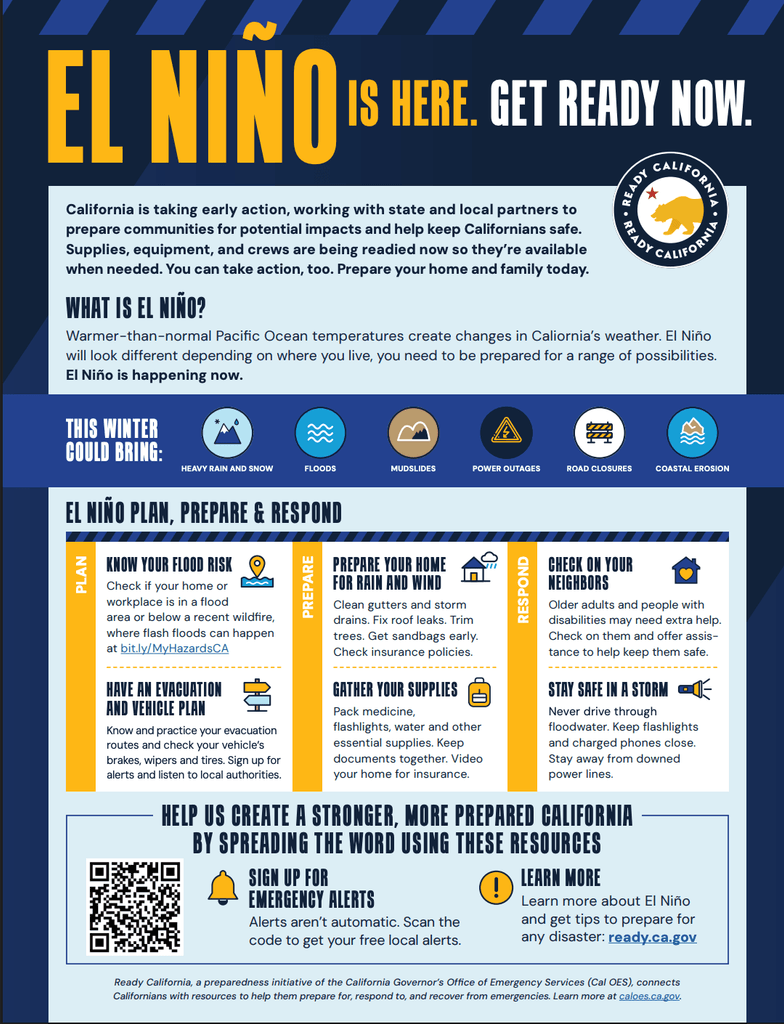
- Check your flood zone: Determine if your home is in a known flood area. If you’re not sure, you can use the FEMA flood map tool by searching the address of your home, business or school. https://msc.fema.gov/portal/search. Other considerations for flood risk include living by a hill or burn scar (previously burned area).
- Review your insurance:
- Home/Apartment: Homeowners are required to obtain flood insurance when they purchase their home if they’re in a high-risk area, but other homeowners and renters can also protect themselves by adding flood coverage.
- Car: If your car insurance policy has comprehensive coverage, it’ll cover flood damage. If your car has only liability insurance, unfortunately, you’re not covered.
Note that new flood policies take 30 days to start. For now, keep important documents on higher shelves at home, and if you’re in a flood zone, if possible, consider parking your car on higher ground.
2. Prepare your home and car
- Sign up for alerts in your local area. In Santa Clara County, you can sign up through AlertSCC. The alerts are geo-located, so you’ll be notified if there is an emergency near you along with instructions on what to do. If you’re not sure how to sign up in your local area, visit https://www.listoscalifornia.org/alerts/. Here you can plug in your zip code and it’ll take you to your local alerting agency.
If a storm is coming, if possible, fully charge your mobile phones, medical equipment, electric cars, etc., and have flashlights handy.
- Weatherize your home: At home, clear debris and clean out rain gutters. Trim tree branches, fix leaks and if you’re in a flood zone, check with your city for sandbag distribution sites (go early as they go quickly). Prepare for power outages by purchasing a generator or having a plan for backup power.
- Medical considerations: If you use medical or assistive equipment, or medicine that must stay cold, plan how to keep it running and cold during an outage. Ask your utility company about signing up for the Medical Baseline program. Through these programs you may be eligible for reduced utility rates and be prioritized for alerts and power restoration. During prolonged power outages, your city and/or utility company may offer places such as community centers or mobile sites where you can charge your medical equipment. Follow your utility company and city on social media for the latest updates during emergencies.
- Winterize your car: Check your brakes, wipers, defroster, heater and exhaust. Check your tires. If you drive in snow, carry chains. Also remember never to travel through flood waters since it’s difficult to know exactly how deep the water is: “Turn around, don’t drown”.
3. Pack supplies and have your “go kit” ready
You may already have an emergency kit in your home, and if not, there’s still time to assemble one for you and your family. Visit https://www.ready.gov/kit, to learn which items are important to include in your kit. What goes in your kit depends on your situation. Do you have a family with young children, elderly relatives, disabled family members, pets, etc.? The main idea is to be able to be on your own for three to seven days. You can place items in a large backpack that you can quickly pick up and go. Suitcases and rolling garbage bins also work!
Go kit basics (from Ready.Gov)
- Water & Food: 1 gallon of water per person per day (at least a 3-day supply) and 3 days of non-perishable food plus a manual can opener.
- Health & Medications: First aid kit, prescription medications (aim for a 7-day supply if possible), medical info, extra glasses/contacts, and masks or dust masks.
- Documents & Cash: Copies of IDs, insurance policies, and vital records in a waterproof container. Save copies on your phone or online. Also include small bills/cash, since ATMs and credit card terminals may not be working during a prolonged power outage.
- Communication & Power: Phone chargers, backup battery bank, flashlight, extra batteries, whistle, and a battery or hand-crank weather radio.
- Make a plan
Planning can be for any type of emergency. Think about where would you meet your family members if your street is flooded or blocked off? What if you have pets, or need your medication, what would you do? Visit https://www.ready.gov/plan, where you’ll find a template to plug in key information to help you stay connected with family when a disaster strikes.
4. How to talk to your children about El Niño and other emergencies.
You may have a child at home who has heard about El Niño at school, social media or the news. The information may be unnerving, causing stress and anxiety. Talk with your children and see how they’re feeling about what they’re hearing about El Niño. There are several resources that offer tips on how to share certain information depending on your child’s age. For younger children visit: https://www.epa.gov/children/extreme-weather-and-preschool-aged-children. Get them involved in preparing an emergency kit. The younger ones can pick one comfort item, like a stuffed animal, a book or two to include in your family kit.
Taking care of ourselves.
This may feel like information overload and we may feel stressed as well, especially after seeing so much chaos on the roads and neighborhoods from recent storms. The good news is that you can start preparing now; it’s never too late. Try to tackle one of the key steps a little at a time, involve friends, family or neighbors. Together we can make a difference, and the more we’re prepared the better outcome we’ll have.
For more information visit:



0 Comments